Wi-Fi
Join your network from Outrigger's screen, so updates, downloads and its web page need no cable.
Your keys, any firmware, one cheap ESP32
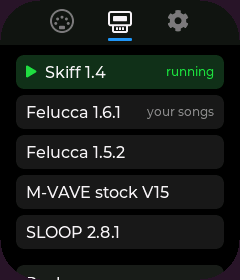
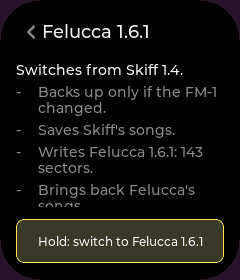
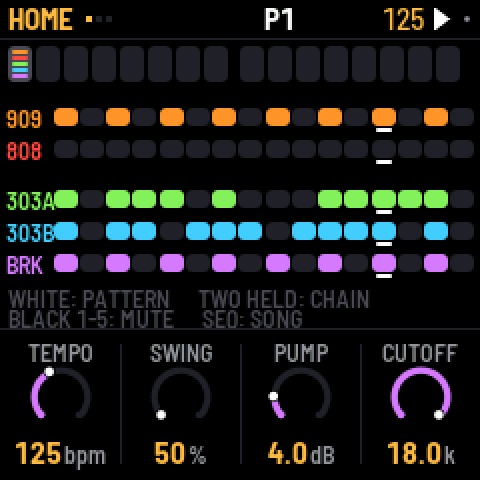
A palm-sized touchscreen on the hub. It sends your playing to the FM-1, shows you what's connected, and handles every firmware switch, backup first.
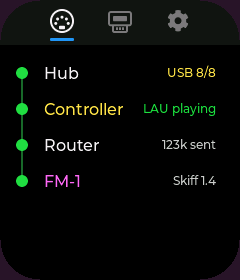
Outrigger, the FM-1 and your MIDI controller all plug in here, and one charger powers them all. Pick a hub that can charge a laptop through it, and plug Outrigger in where the laptop would go.
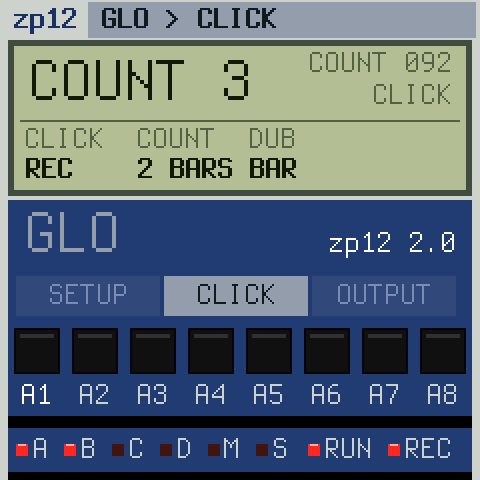
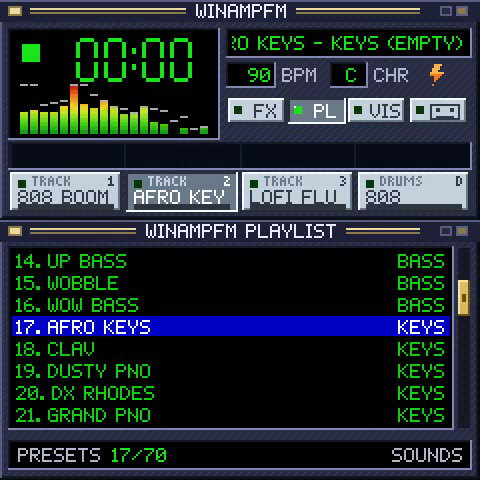
M-VAVE's pocket FM synth, with 27 keys, a speaker and a battery. Its players have written more than a hundred alternative firmwares for it, from grooveboxes to samplers.
Any MIDI controller with a USB port that works without installing a driver: keys, pads, knobs, faders. Plug it in and it plays the FM-1.
Has a 5-pin or 3.5 mm MIDI out? A plain MIDI cable into the FM-1 does that part, no Outrigger needed.
Any MIDI controller with a USB connection plays the FM-1: full-size keys, pads and knobs on a pocket synth. No laptop or MIDI adapters, and one charger runs it all.
Over a hundred community firmwares, and switching should be easy and safe. Outrigger does it in about a minute and backs up first.
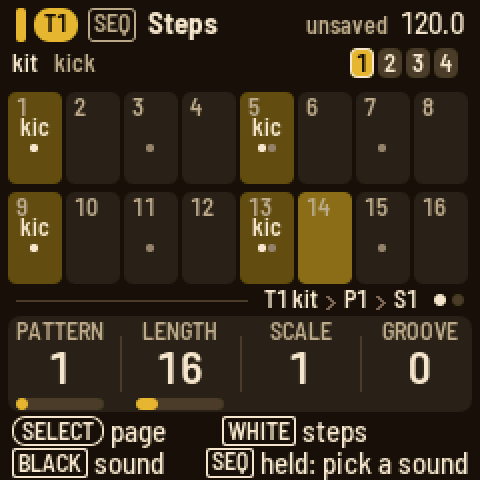
This runs Outrigger. We've tested two:
Other ESP32-S3 touchscreen boards should work if their USB-C goes straight to the chip, with no USB-serial converter in between. Adding one is usually a short board profile, not new code. Got one? Request support here.
Tried another board? Tell us how it went.
We've tested one hub, so check the listing before you buy: it needs its own power and USB-C data ports. Outrigger plugs in where a laptop would.
M-VAVE's pocket FM synth, usually $60–100 depending on the seller.
We suspect any MIDI controller made in the last fifteen years works.
Set up, update and check on Outrigger from your phone or laptop, without plugging it in.
Join your network from Outrigger's screen, so updates, downloads and its web page need no cable.
Open Outrigger from any browser on your Wi-Fi: status, backups and settings.
Browse the Firmware Hub on Outrigger's screen and download straight to Outrigger.
Copy any backup off Outrigger, and restore the one you choose.
Install a new Outrigger without a USB cable. It's running on our bench now.
More of your rig on one hub, and a way to capture what you play.
Capture its audio over USB at 44.1 kHz stereo and pull the takes off over Wi-Fi. Streaming comes after.
Route any MIDI controller with a USB connection to any USB synth, not just the FM-1. The router is built. Pointing it at other synths is a small change we haven't made or tested yet.
Several controllers together, Bluetooth MIDI, and twice the USB room on ESP32-P4 boards.
Boards with a card slot keep every firmware locally, about 60 MB in all.Pro tip: buying an ESP32 now? Get one with a TF card slot, like the 3.5".
More of the catalog on your FM-1.
SLOOP 2.4 and later, and Melodee. They write the part of the FM-1's memory that holds its Bluetooth address, so Outrigger will warn you before it installs one.
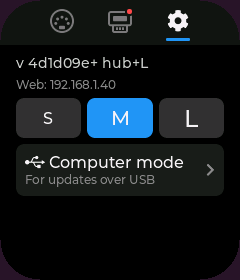
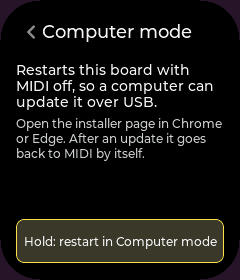
Outrigger's USB port is busy running your MIDI gear, so first hand it to your computer: in Settings, open Computer mode and hold the button. Then plug Outrigger into your computer and click Check my ESP32, then Install. It goes back to MIDI by itself afterwards, and your backups stay.
Try another cable: charge-only cables never show up. Or hold BOOT, tap RST, let go of BOOT, and click Check my ESP32 again.
It's almost certainly not dead: its install mode lives in ROM. The Firmware Hub's Rescue or the Unbricker brings it back from a computer.
For now, Outrigger has room for one MIDI controller next to the FM-1. Unplug the other one. More than one is coming.
One anonymous count when you press Install, unless you untick the box beside that button: which board profile, which edition, the installer's version, whether it finished, and the day. No MAC address, chip serial, IP address, browser details or cookies. A finished install counts once per board in each browser. If an install fails, you can send us its log with "Send this log to Outrigger": you see all of it first, and your board's MAC address is taken out. Page visits are counted by Cloudflare Web Analytics, which uses no cookies and doesn't fingerprint visitors.
On Outrigger itself, never online. Copying them to a computer is coming.
For builders
Each board is a profile: its pins, screen and touch. Screens, installer checks and tests adapt to it. Two tested today. Board list
A shared base with apps on top, built into editions: Hub, or Hub + Loader. A general MIDI hub for any USB synth is planned.
GPL-3.0, core and apps. Build your own edition with only what you need. Source on GitHub
esptool-js 0.7.0 (Apache-2.0), served from this site.
It writes only the program and its startup parts, never your settings or the backup store.
Outrigger is GPL-3.0. The firmware includes LVGL and EspUsbHost (MIT), Arduino_GFX (BSD) and the Arduino ESP32 core (LGPL-2.1). Licenses and credits